Fixturing sits at the intersection of geometry, tolerancing, and machining physics. Engineers often focus on functional performance and dimensional accuracy, but the stability and determinism of the machining setup are equally critical to achieving those outcomes.
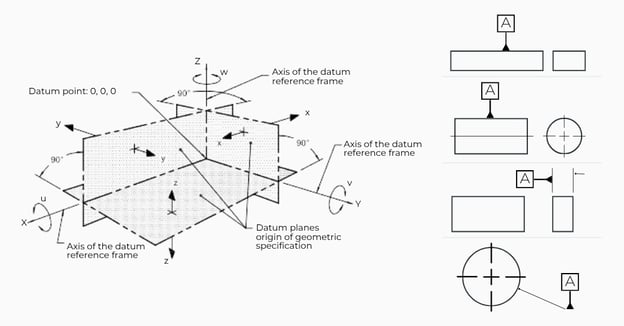
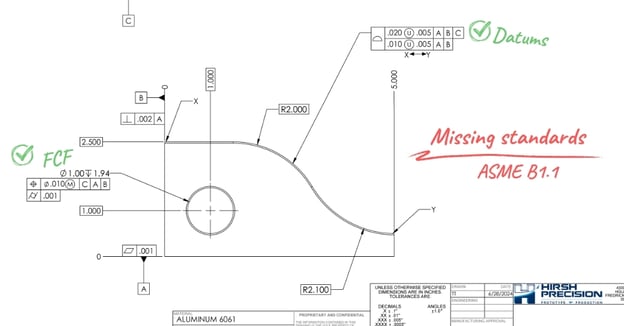
ASME Y14.5 emphasizes the importance of establishing clear, logical datum reference frames (DRFs) to control variation.
-1.jpg?width=750&height=422&name=Diagram%20of%20a%20datum%20reference%20frame%20(DRF)-1.jpg)
In practice, those DRFs become the backbone of the fixturing strategy. When the design’s datum structure aligns cleanly with how a part wants to be held, manufacturing becomes predictable. When it doesn’t, setup complexity grows exponentially.
This expanded perspective is essential for engineers who want to design parts that machine reliably, inspect cleanly, and maintain functional tolerances across production runs.
Fixturing as a Physical Extension of the Datum Reference Frame
ASME Y14.5 defines datums as theoretically exact reference points, lines, and planes from which tolerances are applied.
In machining, fixturing converts those theoretical datums into physical, repeatable constraints. A fixture must lock the part into a position that reflects the DRF defined in the drawing. If the part geometry does not provide accessible, stable surfaces corresponding to the primary, secondary, and tertiary datums, the fixture must compensate. This introduces uncertainty—not because the machinist lacks skill, but because the design’s theoretical reference system isn’t aligned with real-world geometry.
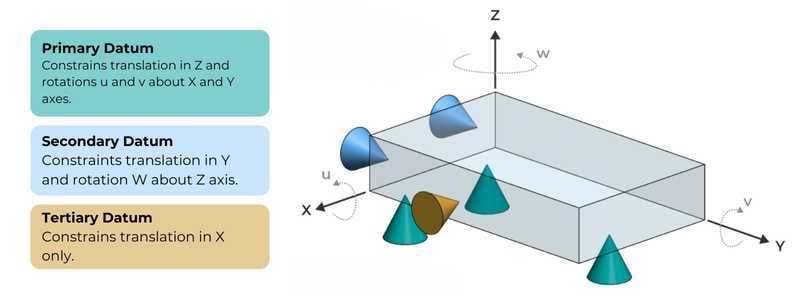
When the primary datum is flat, rigid, and reachable early in the machining process, it supports a robust three-point constraint. When it is curved, interrupted, or only fully formed in a later operation, the machinist may be forced into complex clamping strategies that deviate from the ideal DRF.
Every deviation from the design intent adds potential variation, even with probing and high-end equipment; the more variation you introduce, the more scrap, cost, and lead time you introduce to your manufacturing process.
How the Datum Scheme Drives Setup Strategy
A well-constructed datum scheme establishes a natural machining order. If the datum surfaces can be machined and established early, the part flows through operations with fewer re-grips. For instance:
A primary datum defined on a large planar face allows stable initial workholding and clear orthogonality control.
A secondary datum defined on a perpendicular surface provides deterministic rotation control and supports accurate milling of features tied to the DRF.
A tertiary datum locks the final degree of rotational freedom with minimal ambiguity.
Problems emerge when functionally critical datums are defined on surfaces that cannot be established until later ops, or when the chosen datums have no practical workholding value.
The result is a process where the machinist must temporarily “borrow” surrogate datums or manipulate the part in ways the drawing does not reflect. This drives extra setups, adds touch-off tasks, and can introduce both geometric and statistical variation.
Multi-Axis Machining and the Myth of Reduced Fixturing Needs
Multi-axis machining expands tool access but does not eliminate the need for solid fixturing aligned with the DRF.
A 5-axis machine can reduce the number of setups, but only if the part can be held in a stable orientation that provides both rigidity and clearance for rotary motion. Tall, slender geometries, deep cavities, or off-center mass distribution often require custom soft jaws, dovetail clamps, or modular trunnion fixtures to maintain rigidity.
Difficult-to-Machine Features
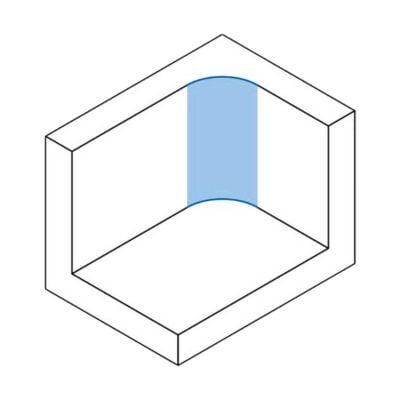
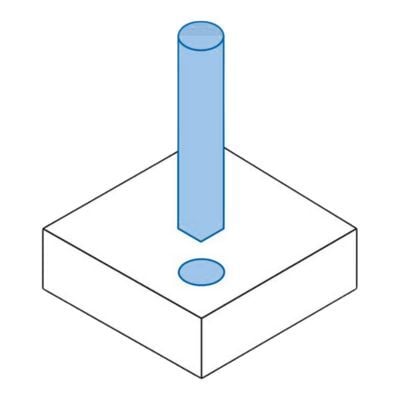
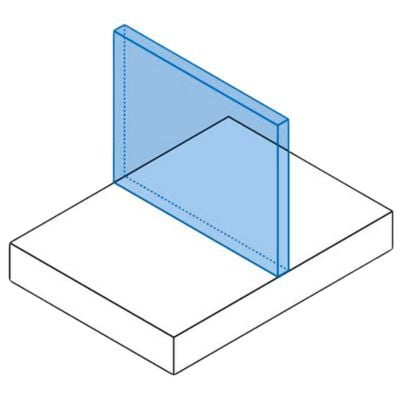
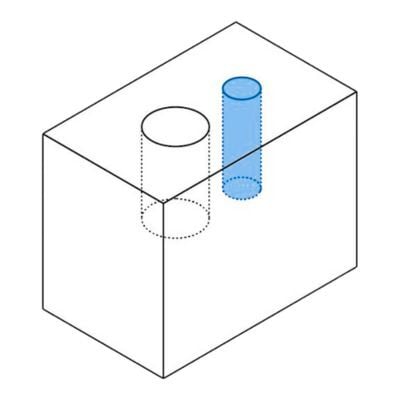
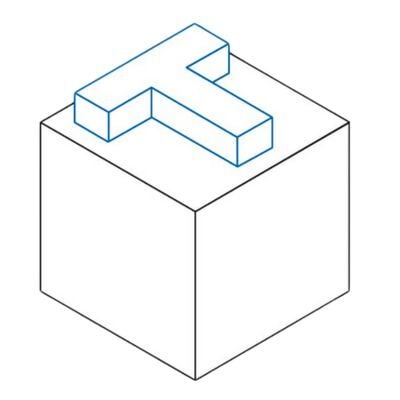
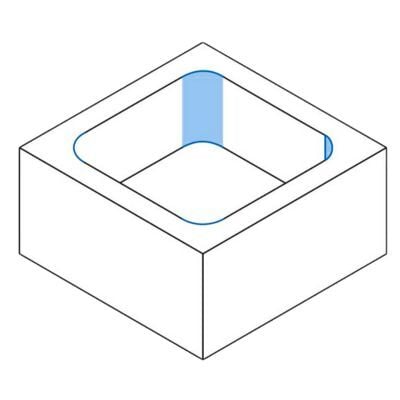
Even when all features can be cut in one workholding, the DRF still governs how the part must be aligned and verified.
A weak datum scheme results in complexity regardless of axis count. Conversely, a strong datum scheme, rooted in manufacturable surfaces, allows 5‑axis machining to reach its full productivity potential.
Material Behavior and Its Influence on Datum Stability
Different materials respond differently to clamping forces and machining loads, and these behaviors interact directly with fixturing strategy.
For example:
Aluminum is elastic and forgiving, but thin-walled aluminum is notoriously prone to distortion.
Plastics deform and recover slowly, making them difficult to fixture with traditional clamp points.
Hardened steels resist movement during machining, but require fixtures rigid enough to withstand elevated cutting forces.
When a datum surface is thin, flexible, or interrupted by pockets and ribs, the DRF becomes harder to establish consistently.
In these cases, engineers often need to design sacrificial machining tabs, add localized beefing for clamp zones, or create features that temporarily act as datums until final machining removes them.
Tolerancing and the Cost of Over-Constrained Geometry
ASME Y14.5 encourages the use of geometric controls that are functionally necessary and logically tied to the datums.
Overly tight or poorly correlated tolerances complicate fixturing because they require a setup that not only fulfills function but controls tiny variations in orientation, flatness, or position. For instance:
- Parallelism or perpendicularity controls require stable, well-defined datum planes.
- Positional tolerances referencing multiple DRFs demand that those datums be established early and consistently.
- Profile tolerances amplify the need for rigid, low-variation setups to maintain contour accuracy.
When tolerances are tighter than the fixture can practically repeat, more advanced solutions—vacuum workholding, custom hardened jaws, fixture-mounted probing routines—become necessary, driving cost and complexity.
Designing With Fixturing Intent: A Standards-Based Approach
The most manufacturable designs follow a unified logic:
- Datums reflect stable, accessible geometry.
- Those datums appear early in the machining sequence.
- The DRF supports both machining and inspection needs.
- Temporary manufacturing datums or sacrificial features are added intentionally, not reactively.
This reflects the core guidance of ASME Y14.5: datums and tolerances should support function, but they should also respect the realities of how the part will be manufactured and inspected.
When engineers and machinists collaborate early—validating datum viability, machining order, and fixturing approach—the resulting process is faster, smoother, and more reliable.
Final Thoughts
Fixturing is a physical expression of the datum reference frame, and setup complexity is the direct result of how well the design’s geometry and DRF align with machining reality.
When engineers design with ASME Y14.5 principles in mind—selecting manufacturable datums, sequencing features logically, and controlling geometry with tolerances tied to stable reference surfaces—fixturing becomes simpler, setups become fewer, and the final part is more consistent across production runs.
Design and manufacturing stop being competing concerns and become complementary disciplines. That alignment is the foundation of true manufacturability.
Lastly, here are some helpful technical drawing-related resources:
Design for CNC Machining: GD&T
Anatomy of an Engineering Drawing

 Amanda White