
High-speed machining (HSM) is not just “faster machining.” It’s a fundamentally different approach that relies on high spindle speeds, low radial engagement, and advanced CAM strategies. These techniques reduce cutting forces, minimize heat generation, and extend tool life. However, they also impose constraints on part geometry and material selection.
Aerospace structural components, medical implants, and semiconductor housings all demand tight tolerances and smooth finishes, often under aggressive lead-time constraints. HSM achieves this by operating at spindle speeds exceeding 20,000 RPM, combined with lighter cuts and optimized toolpaths. The result is shorter cycle times and improved surface quality—but only if the part is designed with HSM in mind.
For example, aerospace brackets often feature deep pockets and thin walls to reduce weight. While these features are essential for performance, they can introduce vibration and deflection during machining. If you go the HSM route, but your design doesn’t account for these factors, the result can be poor surface finish, dimensional inaccuracies, and part rejection.
In this post, we’ll explore the design principles that enable engineers to fully leverage HSM, including tolerance guidelines, tooling selection, and CAM strategies.
Design Considerations for HSM
The key to designing for high-speed machining is about anticipating how the part will behave under aggressive cutting conditions. At spindle speeds exceeding 20,000 RPM, even minor design oversights can lead to chatter, tool breakage, and tolerance failures.
The following considerations address the most common design features that influence HSM performance, from wall thickness and corner radii to material selection and feature accessibility. By incorporating these guidelines early, engineers can avoid costly rework and unlock the full potential of high-speed machining.

Wall Thickness and Rigidity
Thin walls are prone to chatter under high-speed cutting forces. A practical guideline is to maintain a minimum wall thickness of 0.040 in (1.0 mm) for aluminum and 0.060 in (1.5 mm) for titanium when using HSM strategies. Anything thinner may require secondary operations or specialized tooling.
| Material | Minimum Wall Thickness | Notes |
| Aluminum 6061 | 0.040 in (1.0 mm) | Ideal for high-speed milling |
| Aluminum 7075 | 0.045 in (1.15 mm) | Slightly higher rigidity |
| Titanium Grade 5 | 0.060 in (1.5 mm) | Requires reduced feed rates |
| Stainless Steel304 | 0.070 in (1.8 mm) | High heat generation risk |

Internal Corner Radii
Sharp internal corners force the tool to slow down, increasing cycle time and risk of tool breakage. For HSM, specify corner radii that match standard end mill sizes. For example, a 0.125 in (3.2 mm) radius accommodates a 0.250 in (6.35 mm) end mill, allowing continuous toolpaths without abrupt directional changes.
Feature Accessibility
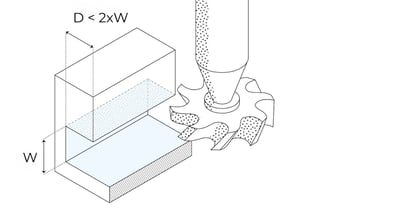
Long-reach tools reduce rigidity and increase chatter risk. Design parts with open geometries or staged machining operations to minimize tool stick-out. For deep pockets, consider adding relief features or splitting the part into multiple components.
Material Selection
Aluminum alloys like 6061 and 7075 are ideal for HSM due to their machinability and thermal conductivity. Titanium and stainless steel require careful planning because of their tendency to generate heat and wear tools quickly. Tool coatings such as TiAlN or AlTiN are essential for these materials to withstand high temperatures.
Each of these design factors—rigidity, corner geometry, accessibility, and material choice—plays a critical role in determining whether a part can be machined efficiently at high speeds. Ignoring them often results in longer cycle times, increased tool wear, and higher scrap rates, all of which drive up cost. Conversely, a design optimized for HSM reduces machining complexity, improves surface finish, and ensures predictable quality.
Tooling and CAM Strategies
Even the most well-designed part will fail to deliver the benefits associated with HSM if the right tooling and programming strategies aren’t in place.
Tooling
Due to elevated spindle speeds, HSM relies on advanced tooling. Solid carbide end mills with variable flute geometry reduce vibration and improve chip evacuation.
For aluminum, uncoated or DLC-coated tools work well, while titanium and stainless steel require TiAlN-coated tools for heat resistance. Tool holders should be balanced for high RPM to prevent spindle damage.
Choosing the correct cutter geometry and coatings for the material, combined with optimized toolpaths, can reduce cycle time by 30% or more while extending tool life.
Programming
Likewise, CAM programming decisions—such as toolpath type, step-over, and feed rate—directly influence cycle time, surface finish, and tool life.
Adaptive toolpaths maintain constant tool engagement, reducing cutting forces and heat buildup. Recommended step-over for HSM is 8–12% of tool diameter, with step-downs adjusted to maintain rigidity. Feed rates can exceed 400–600 IPM for aluminum, but must be reduced for harder materials.
Understanding these factors ensures that design intent translates into efficient, reliable machining on the shop floor.
Neglecting tooling and CAM strategy considerations often results in broken tools, poor finishes, and tolerance deviations that lead to scrap and rework.
By collaborating with machinists and CAM programmers early, engineers can ensure that their designs are not only manufacturable but optimized for high-speed performance.
Failure Scenarios and Cost Implications
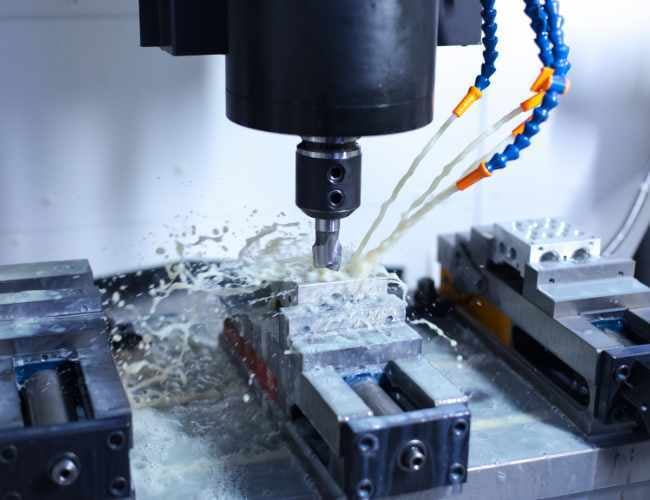
When high-speed machining principles are overlooked during design, the consequences extend far beyond the shop floor. At elevated spindle speeds, even minor design flaws—such as undersized wall thickness or sharp internal corners—can trigger vibration, tool breakage, and tolerance failures.
These issues don’t just compromise part quality; they drive up costs through scrap, rework, and extended cycle times. Understanding the most common failure scenarios helps engineers quantify the risks and make informed design decisions that protect both performance and budget.
Ignoring HSM design principles can lead to catastrophic outcomes:
- Chatter and poor surface finish: Thin walls below the recommended thickness vibrate under cutting forces, requiring rework or scrapping.
- Tool breakage: Sharp corners and deep pockets force abrupt toolpath changes, increasing stress on cutters.
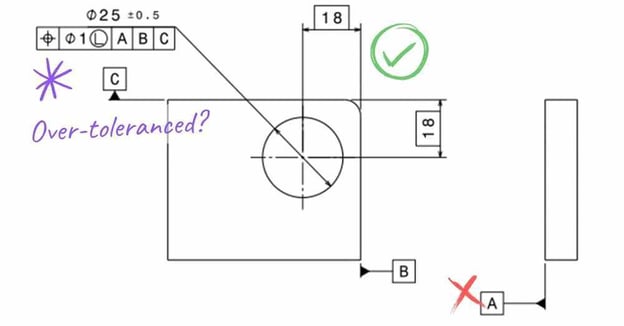
- Tolerance failures: Parts designed with ±0.0005 in tolerances on non-critical features inflate cycle time and cost unnecessarily.
The financial impact of poor HSM design is significant. A single scrapped titanium aerospace component can cost $500 or more, while a failed medical implant may exceed $1,000 in wasted material and lost production time.
Add to that the hidden costs of tool replacement, machine downtime, and missed delivery deadlines, and the case for proactive design becomes clear. By addressing potential failure modes early—through proper tolerances, corner radii, and material considerations—engineers can prevent costly mistakes and ensure that high-speed machining delivers on its promise of efficiency and precision.
Designing for high-speed machining is more than a set of best practices—it’s a strategic design approach that will impact all future production runs of your part.
Collaboration is key. Engaging CAM programmers and machinists early ensures that design intent aligns with manufacturing realities. This partnership helps avoid common pitfalls such as chatter, tool breakage, and tolerance failures, which can lead to costly scrap and missed deadlines.
The payoff for proactive design is substantial. Optimized parts reduce cycle times by up to 30%, extend tool life, and minimize rework.
They also lower per-part costs and improve throughput, giving manufacturers a competitive edge in demanding markets.
High-speed machining delivers its greatest benefits when engineers embrace a mindset of manufacturability from the start.

 Amanda White
 Tre Tiff