One of the most common misconceptions in manufacturing is that material properties are solely determined by alloy composition. A material's mechanical properties are not determined solely by its elemental composition, though. They are equally shaped by the sequence of manufacturing processes applied before the material ever reaches a machine tool.
Casting, forging, rolling, extrusion, powder metallurgy, and additive manufacturing all produce distinct microstructures that influence strength, ductility, fatigue resistance, toughness, dimensional stability, and machinability.
As a result, two parts machined from the same alloy can exhibit dramatically different in-service performance simply because the starting stock was produced using different fabrication methods. The CNC machining process does not create the material's fundamental properties—it reveals and inherits the microstructure established earlier in the manufacturing chain.
The relationship can be summarized through a simple framework:
Fabrication Method Microstructure Mechanical Properties Machining Behavior Part Performance
Understanding this progression provides a more complete picture of why material selection should encompass not only alloy designation but also processing history.
The Metallurgical Foundation: How Fabrication Impacts Properties
To understand the influence of fabrication methods, we have to start at the microstructural level.
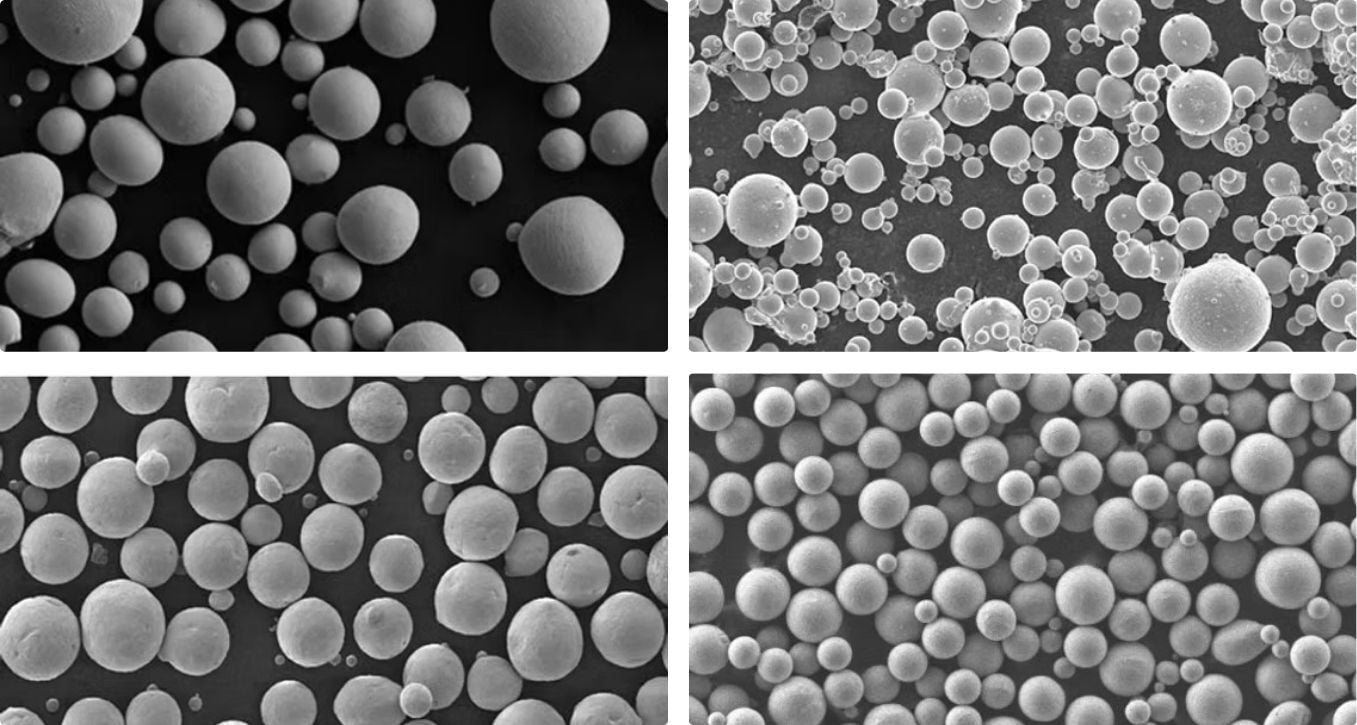
Metals are composed of crystalline grains whose size, distribution, and orientation are established during processing. Fabrication methods alter these characteristics in different ways, resulting in unique property combinations.
Several microstructural features play particularly important roles.
Grain Size
Fine-grained materials generally exhibit higher strength and toughness than coarse-grained materials. Many deformation-based processes such as forging and rolling produce grain refinement that improves overall mechanical performance.
Grain Orientation
Processes involving plastic deformation often create directional grain structures. These anisotropic microstructures can improve strength in specific loading directions but may also introduce direction-dependent mechanical behavior.
Porosity
Voids within the material serve as stress concentrators and fatigue crack initiation sites. Porosity is commonly associated with casting and additive manufacturing processes.
Residual Stress
Internal stresses generated during fabrication can affect dimensional stability during machining and may contribute to distortion in finished components.
Segregation
Non-uniform distribution of alloying elements during solidification can produce localized variations in hardness, corrosion resistance, and mechanical properties.
These microstructural characteristics ultimately control how a material performs both during machining and throughout its service life.
Although every alloy responds differently, certain trends appear consistently across fabrication methods.
| Fabrication Method | Typical Strength | Fatigue Resistance | Defect Risk |
| Casting | Moderate | Lower | High |
| Forging | High | Excellent | Low |
| Rolling | High | Good | Low |
| Extrusion | Moderate to High | Good | Low |
| Powder Metallurgy | Moderate | Moderate | Moderate |
| Additive Manufacturing | High | Variable | Moderate to High |
The most appropriate fabrication route ultimately depends on the balance between performance requirements, manufacturing cost, geometry, and production volume.
Let’s examine the most commonly machined metals and how fabrication method impacts their mechanical properties and performance.
Common Fabrication Methods for Aluminum Alloys
Aluminum remains one of the most frequently machined materials in modern manufacturing due to its favorable strength-to-weight ratio, excellent machinability, and corrosion resistance.
However, fabrication history can significantly influence its behavior.
Learn more about machining aluminum
Design and Manufacturing Considerations for Aluminum Alloys
For the same alloy composition, wrought aluminum products often demonstrate better yield strength, ductility, toughness, and fatigue resistance.
The absence of significant porosity is particularly beneficial in fatigue-critical applications where cracks often initiate at internal defects.
On the manufacturing front, machinists frequently observe more predictable cutting behavior when working with wrought aluminum stock.
Benefits include:
- Consistent chip formation
- Uniform hardness
- Improved surface finish
- Reduced variability in tool wear
By contrast, cast materials may contain localized hard spots, inclusions, or porosity that affect cutting performance and surface quality.
Common Fabrication Methods for Steels
Steel provides perhaps the clearest example of how fabrication processes influence structural performance.
Whether the material is a simple carbon steel such as 1045 or an alloy steel such as 4140, fabrication history plays a critical role in determining final properties.
Learn more about machining steel
Design and Manufacturing Considerations for Carbon and Steel Alloys
Compared with castings, forged steels typically offer better fatigue strength, toughness, fracture resistance, and more predictable mechanical behavior. This improvement in fatigue performance can be substantial, since forging minimizes internal defects and porosity.
Switching gears to the manufacturing part of the equation. Forged steels often exhibit greater hardness and strength, which can increase cutting forces and tool wear. However, the tradeoff is significantly improved structural reliability for critical applications such as:
- Shafts
- Landing gear components
- Pressure-containing components
- Rotating equipment
When fatigue resistance is paramount, the benefits of forging frequently outweigh the machining challenges
Common Fabrication Methods for Stainless Steel
Stainless steels are widely used in CNC machining because they combine corrosion resistance, durability, and mechanical strength. However, stainless steel is particularly sensitive to fabrication history.
Processes such as casting, rolling, forging, cold working, and heat treatment can significantly influence strength, toughness, corrosion resistance, and machining behavior.
Learn more about machining stainless steel
Design and Manufacturing Considerations for Stainless Steel
In the case of stainless steels, fabrication method and heat-treatment history primarily impact yield strength, hardness, toughness, fatigue resistance, and corrosion resistance.
From a CNC machining perspective, annealed wrought stainless steels typically provide the best balance of machinability and performance, while heavily cold-worked and precipitation-hardened grades may require more aggressive tooling strategies and careful process control.
Common Fabrication Methods for Brass
Compared with steel and titanium, brass generally exhibits smaller property variations resulting from fabrication method. Nevertheless, processing history still influences machining performance and dimensional stability.
Learn more about machining brass
Design and Manufacturing Considerations for Brass
For brass, fabrication methods primarily affect consistency, dimensional stability, surface quality, and wear characteristics. That said, the resulting differences are generally less pronounced than those observed in steels or titanium alloys.
For manufacturing, extruded brass remains the benchmark for machining efficiency. Advantages for this fabrication method include:
- Excellent chip control
- Minimal tool wear
- Exceptional surface finish
- High production rate
Common Fabrication Methods for Titanium Alloys
Among commonly machined engineering metals, titanium is often the most sensitive to fabrication history. This is particularly true for Ti-6Al-4V, the dominant titanium alloy used throughout aerospace, medical, and high-performance industrial sectors.
Learn more about machining titanium alloys
Design and Manufacturing Considerations for Titanium
If considering titanium for your machined component, know that fabrication method critically impacts an alloy’s tensile strength, fatigue resistance, fracture toughness, anisotropy, and residual stress levels.
Defect populations become especially important because titanium components are frequently used in high-consequence applications where fatigue life is critical.
Machining titanium is already demanding due to low thermal conductivity and high cutting temperatures.
Additional challenges may arise when processing additively manufactured material because residual stresses can contribute to:
- Part distortion
- Dimensional instability
- Variable cutting behavior
For this reason, stress-relief heat treatments often form an essential part of the manufacturing process.
Engineering Takeaways
The mechanical performance of a CNC-machined component begins long before the first tool touches the workpiece.
Alloys do not emerge from the supply chain as fully defined engineering materials. Their ultimate properties are shaped through a sequence of manufacturing processes that establish grain structure, defect populations, residual stresses, and phase distributions.
Casting, forging, rolling, extrusion, powder metallurgy, and additive manufacturing all leave distinct metallurgical signatures. Those signatures influence strength, ductility, toughness, fatigue resistance, corrosion behavior, machinability, and dimensional stability.
From a manufacturing engineering perspective, alloy chemistry represents only one piece of the equation. Engineers should also ask:
- How was the material produced?
- What microstructure resulted from that process?
- Is fatigue life a critical design requirement?
- Are directional properties acceptable?
- Will residual stresses affect machining accuracy?
- Could internal defects compromise service performance?
These questions often determine whether a component merely meets specification or delivers long-term reliability in the field.
Procurement specifications can benefit from including:
- Alloy grade
- Material temper
- Product form
- Fabrication route
- Required certifications and testing standards
Providing this level of detail helps ensure that suppliers deliver material with the intended mechanical characteristics.
The more complete relationship is:
Chemistry + Fabrication History + Heat Treatment = Material Performance
For engineers striving to maximize component reliability, machining efficiency, and long-term performance, the most important question is often not "What alloy is this?" but rather:
"How was this material made before it arrived at the machine tool?"
Understanding the answer provides a decisive advantage in material selection, process planning, and ultimately, product performance.
 Amanda White